+91 9088498142
info@voteniti.in
Introduction:
The Changing Landscape: Start by addressing the shift towards digital campaigning. Acknowledge that while traditional methods are still relevant, a strong digital presence is no longer optional—it's essential for reaching and persuading modern voters.
The Challenges: Briefly touch upon the complexities of the digital space: information overload, audience fragmentation, changing algorithms, and the need for precision.
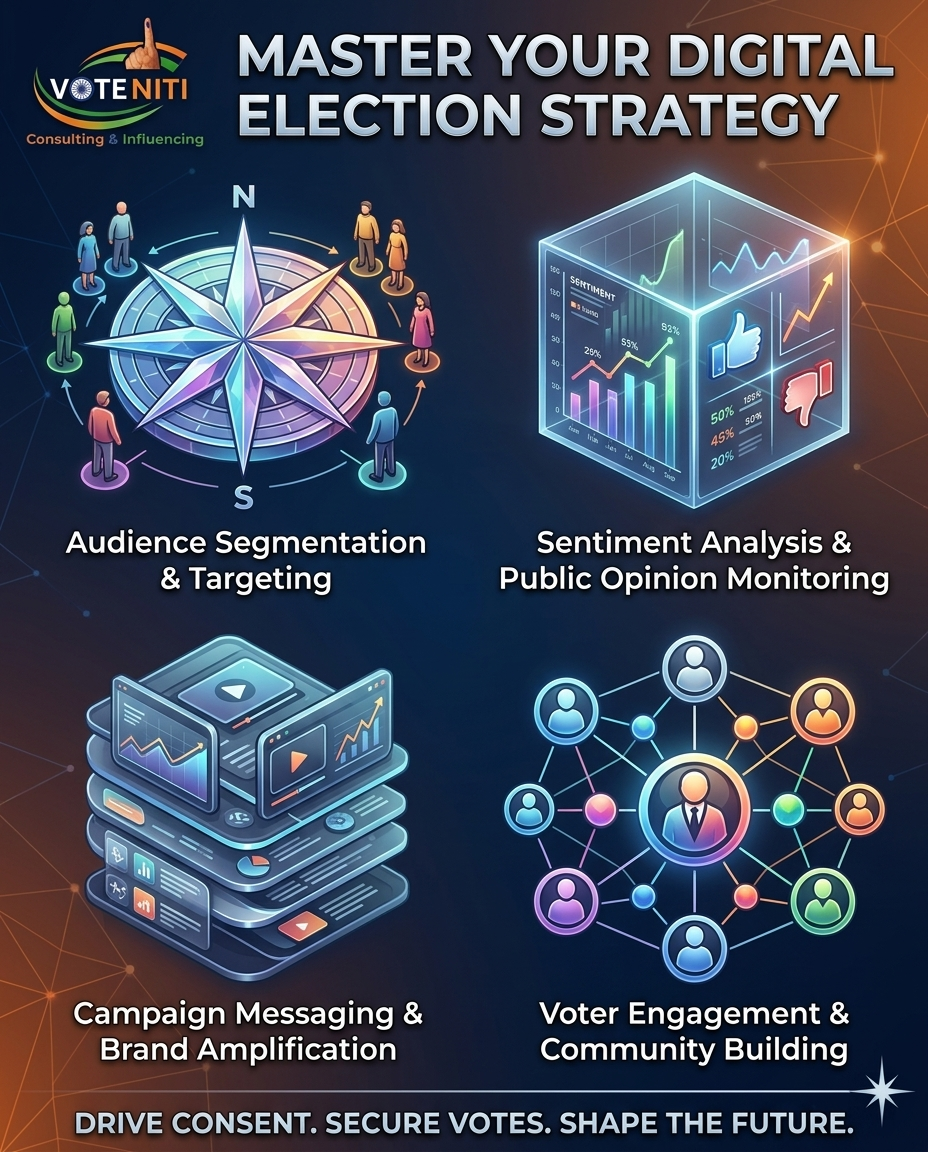
The VoteNiti Approach: Introduce VoteNiti as a specialized consulting firm that helps candidates and parties navigate these challenges. Position the infographic as the core framework for a winning strategy.
Pillar 1: Audience Segmentation & Targeting (Focus on the Compass Icon):
Explain the Concept: Define audience segmentation and targeting in a political context. Why is it important not to treat all voters the same?
Beyond Demographics: Explain that segmentation goes beyond age or location. It involves understanding psychographics (values, beliefs, interests), behavior (voting history, online activity), and issue priorities.
Precision Messaging: Discuss how this data allows campaigns to craft highly tailored messages that resonate with specific voter segments. This increases relevance and reduces wasted ad spend.
The Compass Metaphor: Use the compass from the image to illustrate the idea of finding your direction and focusing your efforts. It’s not about blasting a message everywhere, but about knowing who to speak to and where they are.
Actionable Tips: Offer simple advice, like conducting voter surveys or using social media analytics to start identifying key audience segments.
Pillar 2: Sentiment Analysis & Public Opinion Monitoring (Focus on the Data Cube & Charts):
Understanding Public Opinion: Explain why real-time insight into public sentiment is crucial. It’s not just about what people are saying, but how they feel about a candidate, a party, or a specific issue.
How Sentiment Analysis Works: Briefly (and simply) explain the concept. It involves using tools to analyze online conversations (social media, news, blogs) to determine if the overall tone is positive, negative, or neutral.
Proactive Campaigning: Discuss how this data allows campaigns to identify emerging issues quickly, track the effectiveness of their messaging, and even predict potential crises.
The Data Cube Metaphor: Use the data cube and charts to emphasize the importance of data-driven decision-making. Campaigns shouldn't rely on guesswork or gut feelings; they should be guided by concrete data and trends.
Actionable Tips: Suggest setting up Google Alerts or using free/paid social media monitoring tools to start tracking online conversations.
Pillar 3: Campaign Messaging & Brand Amplification (Focus on the Stack of Screens & Video Icons):
Crafting a Compelling Narrative: Explain that a campaign needs a clear, consistent, and emotionally resonant message that connects with voters.
Content Formats: Emphasize the importance of diverse content formats, particularly video (as highlighted by the icons in the image). Short videos, live streams, and storytelling are powerful tools.
Brand Consistency: Discuss the need for a consistent brand identity across all digital platforms (website, social media, email). This builds recognition and trust.
Multi-Platform Strategy: Explain that messaging needs to be adapted for different platforms (e.g., a tweet vs. an email vs. a video) while maintaining the core message.
Actionable Tips: Offer advice on developing a content calendar, creating high-quality (even low-budget) videos, and using a consistent visual style (colors, logos).
Pillar 4: Voter Engagement & Community Building (Focus on the Connected People Icons):
Moving Beyond One-Way Communication: Explain that digital campaigning is not just about broadcasting messages. It’s about building relationships and fostering two-way communication.
Creating Online Communities: Discuss the importance of creating spaces where voters can engage with the campaign and with each other. This can be social media groups, email newsletters, or town hall events.
Mobilizing Supporters: Explain that engaged supporters are a campaign’s biggest asset. They become advocates, volunteers, and donors.
The Connected Network Metaphor: Use the icon of connected people with a central figure to illustrate the idea of building a strong, interlinked community of supporters. The campaign shouldn't be distant; it should be at the heart of this network.
Actionable Tips: Suggest simple engagement tactics like asking questions on social media, responding to comments and messages, hosting Q&A sessions, and creating specific content for volunteers.
Conclusion:
Integration is Key: Emphasize that these four pillars are not separate. They are interconnected and must work together for a truly effective strategy. Segmentation guides messaging, sentiment analysis informs content, and strong messaging fuels engagement.
The Value of Expertise: Reiterate that navigating this complex landscape can be challenging. Position VoteNiti as the expert partner that can provide the necessary data, strategy, and execution to help campaigns succeed.
Call to Action (CTA): Encourage readers to contact VoteNiti for a consultation, sign up for a newsletter, or download a related resource. This converts interested readers into potential leads.
Reiterate the Slogan: End by reminding readers of the ultimate goal, as stated at the bottom of the infographic: "DRIVE CONSENT. SECURE VOTES. SHAPE THE FUTURE." This connects the digital strategy to the real-world impact.

 April 28, 2026 - BY Admin