+91 9088498142
info@voteniti.in
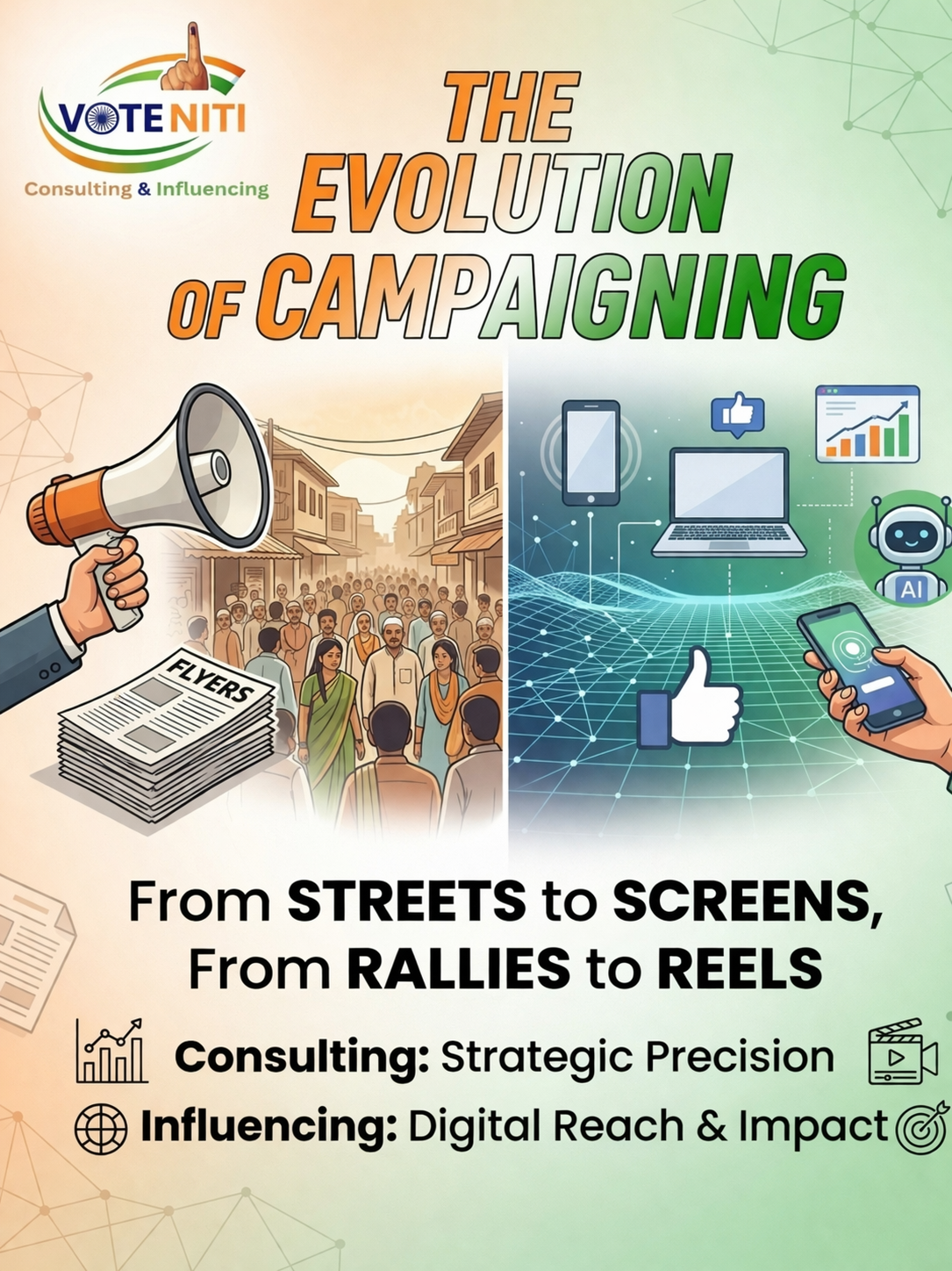
Political campaigning has undergone a dramatic transformation over the decades. From door-to-door canvassing and public rallies to data-driven digital strategies, the way leaders connect with voters has evolved significantly. In today’s fast-paced, technology-driven world, understanding this evolution is crucial for any political campaign aiming to succeed.
In the early days, campaigning was deeply personal and localized. Candidates relied heavily on:
These methods helped build strong personal connections but were limited in reach and scalability. Campaign success largely depended on physical presence and grassroots mobilization.
With the advent of radio and television, political campaigns entered a new phase. Leaders could now communicate with millions of voters simultaneously. This era saw:
Mass media made campaigns more structured and message-driven, but it still lacked precise targeting.
The emergence of the internet and social media changed everything. Campaigning became faster, smarter, and more targeted. Key developments included:
Digital campaigning allows political parties to reach voters instantly and measure the effectiveness of their strategies in real time.
Modern campaigns are powered by data. Advanced tools now help in:
This approach ensures that campaigns are not just widespread but also highly targeted and impactful.
Technology has introduced innovative campaign methods such as:
These tools help campaigns operate with precision and efficiency, reaching the right audience at the right time.
While digital transformation offers many advantages, it also comes with challenges:
Successful campaigns must balance innovation with ethical practices and transparency.
The future of political campaigning lies in deeper personalization and smarter technologies. Trends to watch include:
Campaigns will continue to evolve, but the core goal remains the same: building trust and connecting with voters.
The evolution of campaigning reflects the changing dynamics of society and technology. From traditional grassroots efforts to advanced digital strategies, each phase has contributed to shaping modern political communication.
At VoteNiti, we combine the best of traditional methods with cutting-edge digital tools to create powerful, result-driven campaigns. By leveraging data, technology, and strategic insights, we help political leaders connect with voters more effectively and achieve their campaign goals.

 April 01, 2026 - BY Admin