+91 9088498142
info@voteniti.in
A Deep Insight into How Indian Voters Think, Feel, and
Decide
Elections in India are not decided only by manifestos,
speeches, or campaign budgets. They are decided inside the mind of the voter.
Understanding voter psychology and behavior is the backbone of every successful
political campaign in India.
India’s electorate is one of the most diverse in the world.
Social structure, emotions, identity, local realities, and trust all shape
voting decisions. Political campaigns that understand these factors gain a
decisive advantage.
At voteniti, voter psychology forms the foundation
of our election campaign strategies.
What Is Voter Psychology?
Voter psychology is the study of how voters think, feel,
and behave while making electoral decisions. It includes:
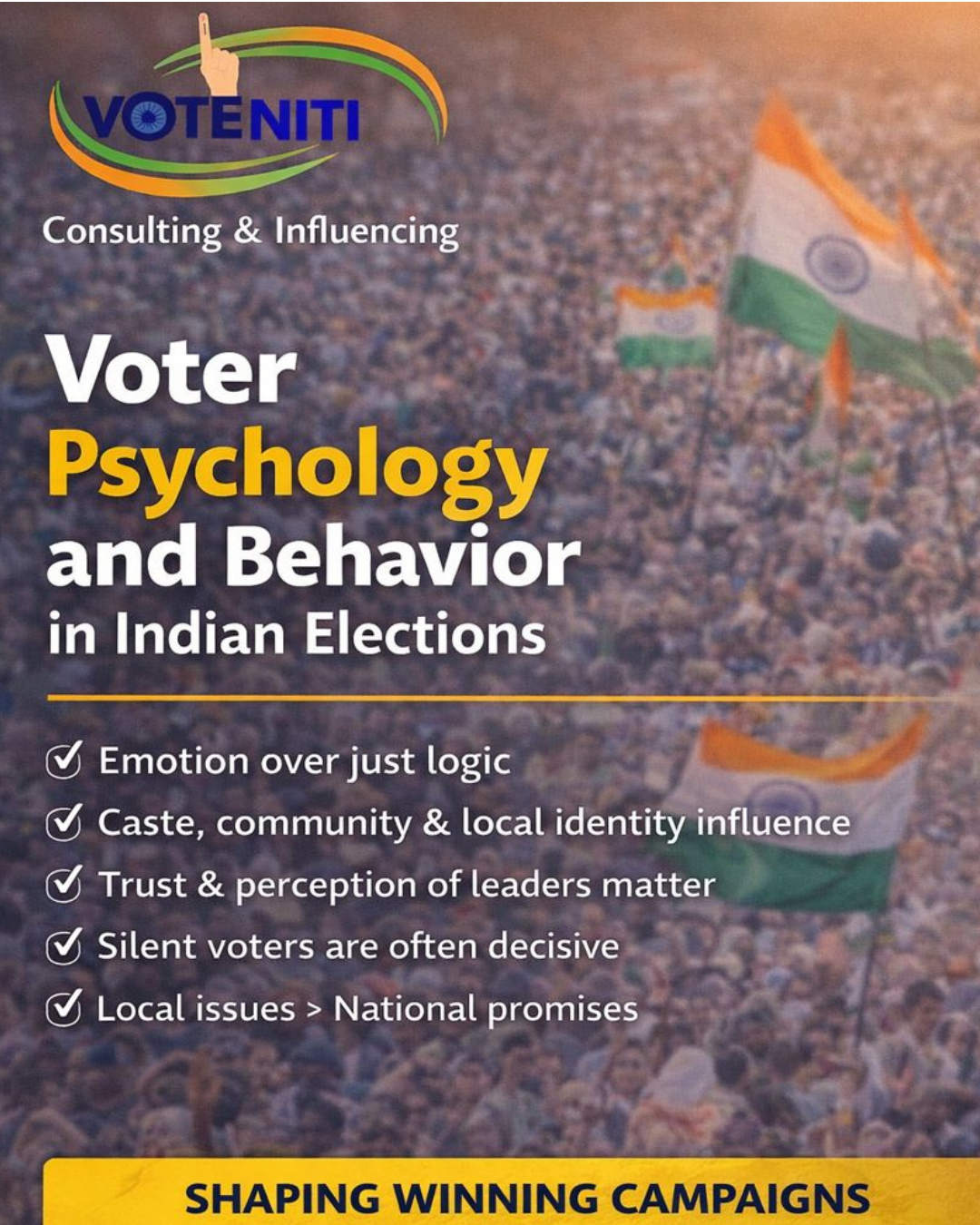
Most voters do not vote purely on logic or policy details.
Emotional resonance and personal connection play a dominant role.
The Indian Voter: A Unique Psychological Landscape
Indian voters are influenced by multiple layers at once:
This makes Indian elections complex, dynamic, and highly
localized.
Core Psychological Factors Influencing Voter Behavior in
India
1. Emotion Over Information
Emotion is often stronger than facts in influencing voter
decisions. Hope, fear, pride, anger, and trust shape political choices more
than policy documents.
Campaigns that evoke emotion:
Key Insight:
Voters remember how a leader made them feel, not what percentage they promised.
2. Identity and Social Belonging
Caste, community, religion, language, and regional identity
still influence voting behavior in many parts of India. Identity creates a
sense of belonging and representation.
However, modern voters also expect:
Winning strategy:
Balance identity awareness with inclusive development messaging.
3. Local Issues Drive Voting Decisions
For most Indian voters, daily problems matter more than
national debates:
A candidate who solves local issues is often preferred over
one with big national promises.
4. Trust, Credibility, and Accessibility
Voters evaluate leaders on:
Trust is built over time and can be lost quickly due to:
5. Influence of Family, Community & Opinion Leaders
In many Indian households, voting decisions are influenced
by:
Political campaigns that engage these opinion leaders
ethically gain deeper penetration.
Silent Voters: The Underrated Power Group
Silent voters do not attend rallies, post online, or openly
discuss politics. Yet they often decide elections.
Characteristics of silent voters:
Understanding silent voters requires:
Perception Management in Political Campaigns
In politics, perception often becomes reality.
A leader may be:
Perception is shaped by:
Campaigns must actively manage perception across all
platforms.
The Role of Digital Media in Voter Psychology
Digital platforms significantly influence modern voter
behavior:
However, digital campaigns must be aligned with ground
realities. Online popularity without offline presence rarely converts into
votes.
Cognitive Biases That Affect Voting Behavior
Some common psychological biases in voters include:
Successful campaigns design messaging keeping these biases
in mind.
Ethical Use of Voter Psychology
Understanding voter psychology is not about manipulation.
Ethical political consulting focuses on:
Long-term political success depends on trust, not deception.
How voteniti Uses Voter Psychology
At voteniti, voter psychology is integrated into:
Our approach ensures that campaigns connect emotionally
while staying ethical and data-driven.
Why Voter Psychology Is the Future of Indian Elections
Indian elections are evolving from mass rallies to mindset-driven
campaigns. Leaders who understand voter psychology:
Conclusion
Elections in India are not just political contests — they
are psychological battles of perception, trust, and connection. Understanding
voter psychology and behavior is no longer optional; it is essential.
At voteniti, we help leaders understand voters
before asking for their votes.

 January 27, 2026 - BY Admin